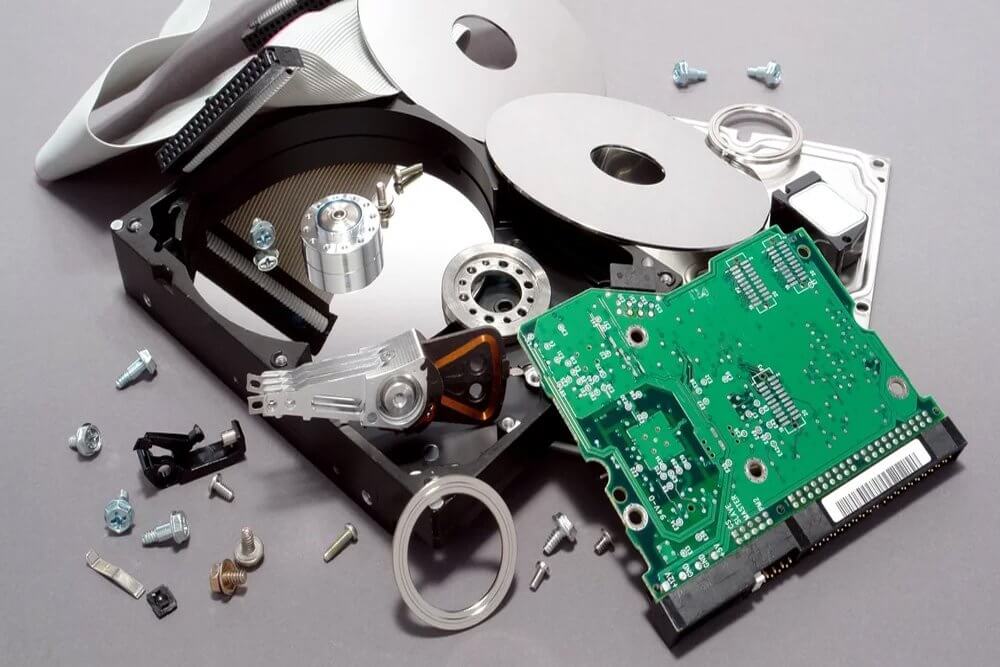
Deleted Doesn't Mean Gone: Why Hard Drive Destruction Matters for Businesses
Most businesses assume that deleting files or formatting a hard drive permanently removes data. Unfortunately, that's not always true.
In reality, sensitive information can often remain stored on a device long after it appears to be deleted. With the right software and technical expertise, criminals can recover financial records, customer information, employee data, and other confidential files from improperly discarded hard drives.
As cybercrime and data breaches continue to make headlines, businesses must pay closer attention to how they dispose of retired computers, servers, and storage devices. Proper hard drive destruction is no longer just an IT best practice—it's an essential part of protecting your organization, your customers, and your reputation.
The Hidden Risk Inside Old Hard Drives
Every computer, laptop, server, and storage device contains information that accumulates over time. Even devices that seem outdated or no longer operational may still hold valuable data.
Common information stored on hard drives includes:
Customer records
Employee information
Financial documents
Tax records
Medical information
Legal files
Internal communications
Proprietary business data
Login credentials and passwords
When a hard drive is disposed of improperly, this information can potentially be recovered and misused.
Many organizations are surprised to learn that data can remain accessible even after files have been deleted or a device has been reset to factory settings.
Why Deleting Files Isn't Enough
When you delete a file from a computer, the data is not immediately erased from the hard drive. Instead, the operating system simply marks that storage space as available for future use.
Until that space is overwritten, the information may still exist on the device.
Similarly, formatting a hard drive often removes the file system structure but may leave the underlying data intact. Specialized recovery software can frequently retrieve files that users believe are permanently gone.
This creates a serious security risk for businesses that dispose of old devices without taking proper precautions.
The reality is simple:
Deleted does not mean destroyed.
Real-World Consequences of Improper Hard Drive Disposal
Improper hard drive disposal can have significant consequences for businesses of all sizes.
Potential risks include:
✔ Data Breaches
Sensitive customer, employee, or financial information may be exposed if hard drives are discarded without secure destruction.
✔ Identity Theft
Personal information recovered from old devices can be used for fraudulent purposes.
✔ Financial Loss
Data breaches often result in legal expenses, remediation costs, and lost business opportunities.
✔ Reputational Damage
Customers expect businesses to protect their information. A preventable data exposure incident can quickly erode trust and damage a company's reputation.
✔ Regulatory Issues
Organizations that handle sensitive information may face compliance challenges when records are not disposed of securely.
For many businesses, the cost of proper hard drive destruction is insignificant compared to the potential cost of a data breach.
Physical Destruction: The Most Reliable Solution
While there are several methods used to manage retired storage devices, physical destruction remains one of the most effective ways to ensure sensitive information cannot be recovered.
Hard drive destruction typically involves physically shredding or crushing the storage device so that the internal components are rendered unusable.
Once the drive has been destroyed, recovering information becomes virtually impossible.
Physical destruction provides organizations with confidence that confidential data has been permanently eliminated.
Which Businesses Need Hard Drive Destruction?
Many people associate hard drive destruction with large corporations, but organizations of every size can benefit from secure data disposal practices.
Industries that commonly require hard drive destruction include:
✔ Healthcare Providers
Patient records, insurance information, and billing data must be carefully protected.
✔ Law Firms
Legal documents, case files, and client communications often contain highly confidential information.
✔ Financial Institutions
Banks, accountants, and financial advisors manage sensitive financial records that should never be exposed.
✔ Government Agencies
Public organizations frequently store confidential information that requires secure disposal.
✔ Educational Institutions
Schools and universities often maintain student records, employee information, and financial data.
✔ Small Businesses
Even small organizations handle customer information, employee records, and financial documents that could be valuable to criminals.
Regardless of industry, any business that stores confidential information should have a plan for secure hard drive disposal.
Hard Drives Aren't the Only Devices That Store Data
Modern businesses rely on a wide variety of data storage devices beyond traditional hard drives.
Examples include:
Solid-state drives (SSDs)
Backup tapes
USB flash drives
External hard drives
CDs and DVDs
Servers and storage arrays
Many of these devices contain the same sensitive information found on standard hard drives and should be destroyed using secure methods when they reach the end of their useful life.
When Should Businesses Destroy Hard Drives?
There are several situations where hard drive destruction should be considered:
✔ Technology Upgrades
Replacing computers, servers, or office equipment often leaves organizations with retired devices containing sensitive information.
✔ Employee Device Replacement
Old laptops and workstations may contain years of business data that should not be discarded without proper destruction.
✔ Office Relocations
Moving offices is an ideal time to review and securely dispose of outdated technology.
✔ Business Closures
Organizations that are downsizing, restructuring, or closing should ensure sensitive data does not leave the business unsecured.
✔ Storage Room Cleanouts
Many companies discover old hard drives stored in boxes, filing rooms, or storage areas. These devices often represent hidden security risks.
Creating a Secure Data Disposal Strategy
Protecting business information requires more than cybersecurity software and strong passwords. A complete data security strategy should also address how information is destroyed when devices are no longer needed.
Best practices include:
Maintaining an inventory of data-bearing devices
Establishing disposal procedures
Using professional destruction services
Training employees on proper data handling
Documenting destruction activities when necessary
By planning ahead, businesses can reduce risk and maintain better control over sensitive information.
Protect Your Business Before a Problem Occurs
Many data breaches occur not because of sophisticated cyberattacks, but because organizations overlook basic security practices. Improper disposal of hard drives remains one of the most preventable risks businesses face.
Secure hard drive destruction provides a simple and effective way to ensure confidential information does not survive beyond the life of a device.
For businesses throughout Ogden, Layton, Roy, Clearfield, Syracuse, Salt Lake City, and surrounding Northern Utah communities, Security Shred provides secure hard drive destruction services designed to help organizations protect sensitive information and reduce data security risks.
Whether you're replacing a few computers or managing a large technology refresh project, proper hard drive destruction can help safeguard your business, your employees, and your customers long after a device is retired.
